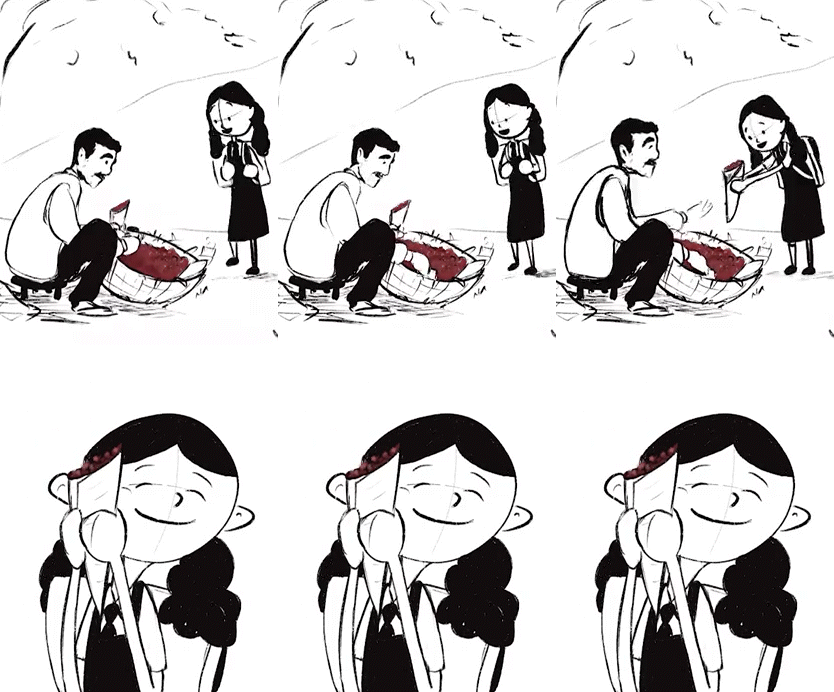
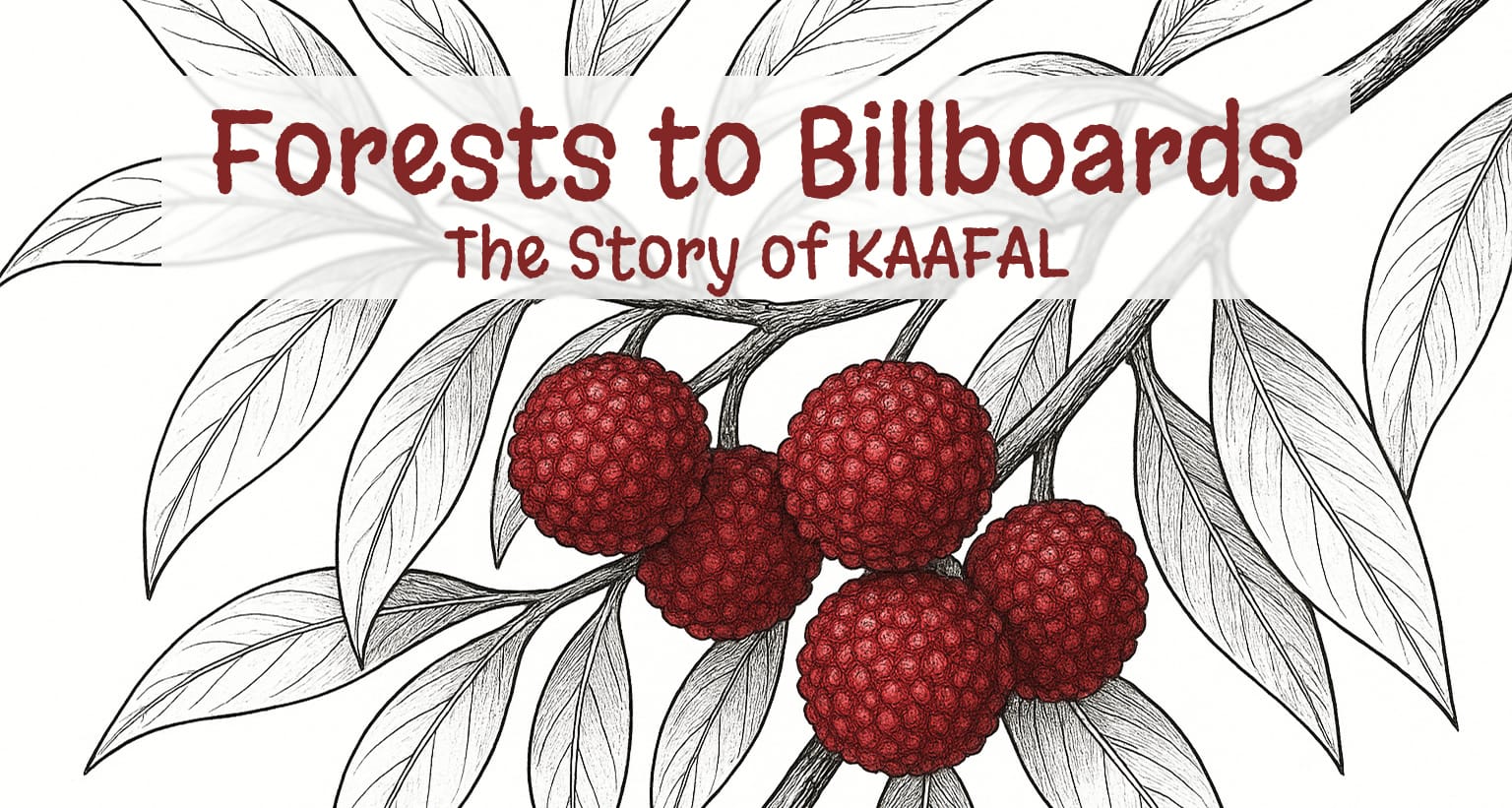
Once, kaafal grew quietly in the oak forests, wild and free, hidden like red beads among green leaves, waiting for a passing child or a curious bird.
It belonged to no one, yet everyone in the hills carried its sweet-tart taste in their memories.
But with time, kaafal grew up too. It learnt to wear a suit. It found itself on posters, in brand names, at music fests, and on glossy hotel menus. The fruit that once stained fingers under the open sky now poses on billboards, its wildness packaged, its sweetness priced.
And yet, beyond the noise of the world, the real kaafal still waits, free, untamed, and stubbornly itself.
Maybe this isn’t just the story of kaafal. Maybe it’s the story of all of us who left small towns for bigger cities, chasing dreams, searching for meaning, building lives that looked shinier from far away.
We learnt the language of the cities, how to walk faster, talk sharper, dream bigger. Some of us even became “big city heroes” for those back home, people who made it, people whose stories get told with pride at family gatherings.
But deep down, we know, we still belong to the hills we came from. To their quiet pace, their earthy laughter, their kaafal summers.
Because no matter how much the world polishes us, a part of us still craves that wild simplicity, that sense of belonging without boundaries, that unbranded sweetness of home.
Kaafal reminds us that we can grow, evolve, and shine anywhere. But the forest we come from never really leaves us. It hums quietly within, in the way we smile at sunsets, in the smell of the first rain, and in the memories that still taste like home.